Traverse Mountain Water Damage: What Every Homeowner Should Know
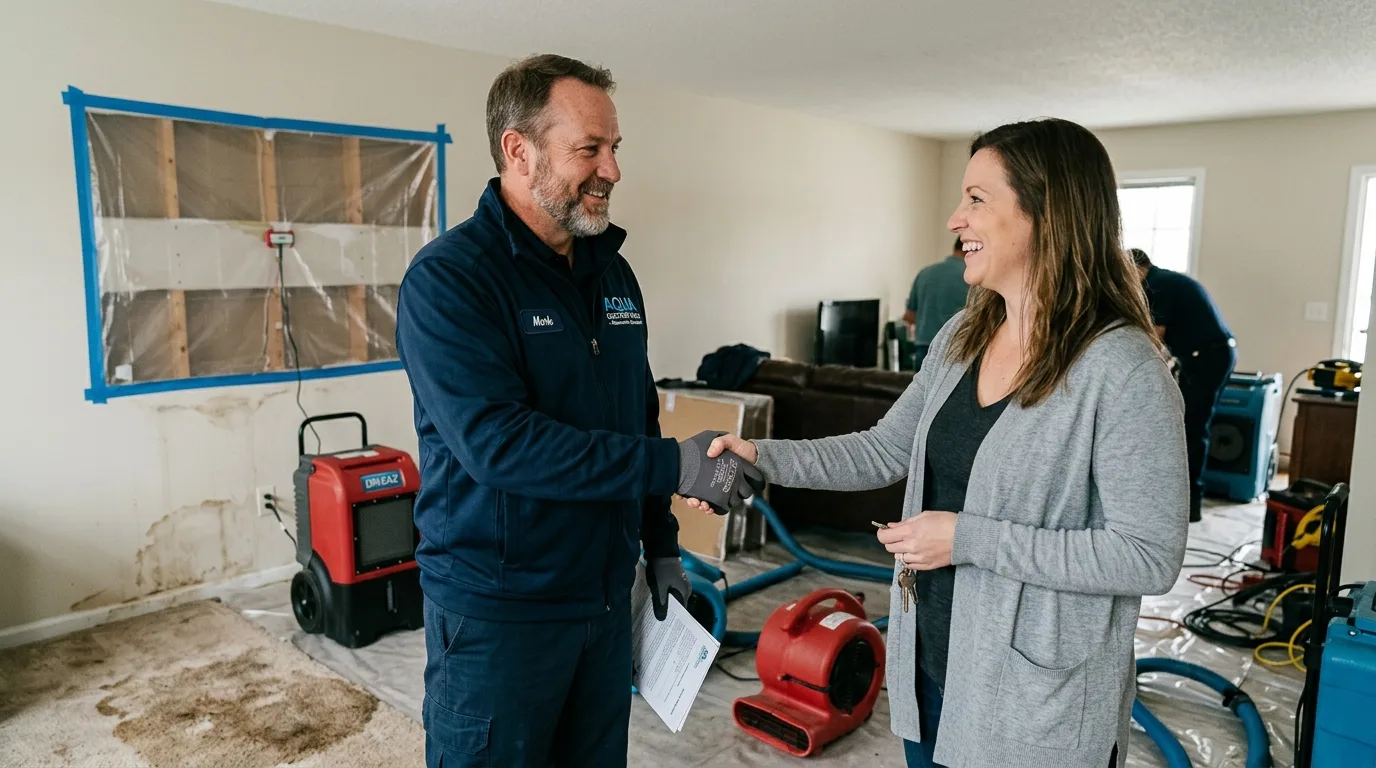
Traverse Mountain homeowners have discovered something counterintuitive: a brand-new home doesn’t mean a flood-proof home. In fact, many of the water damage calls we respond to in Lehi come from Traverse Mountain homes built between 2005 and 2015 — not because the homes were built poorly, but because hillside terrain, disturbed soil, and rapid development created a specific set of water damage vulnerabilities that brand-new construction doesn’t automatically avoid. If you own a home in Traverse Mountain, this guide is for you.
In this post, we cover what makes Traverse Mountain uniquely vulnerable to water damage, the specific scenarios homeowners encounter most often, and what to do when water enters a hillside home.
Water Damage in Traverse Mountain?
Fast professional response for Lehi's east bench community. Call (877) 698-1311 anytime.
Why Traverse Mountain Is Different
Traverse Mountain sits on the east bench above the main Lehi urban core, adjacent to the I-15 corridor at Exit 284 and the Traverse Mountain Outlets. The hillside terrain was attractive for development because of views and proximity to the Wasatch Mountains — but that same terrain creates water management challenges that flat-terrain development avoids.
Hillside grading and water direction: When Traverse Mountain was developed, natural drainage patterns were disrupted by earthwork. Streets, foundations, and landscaping now redirect water that once ran in natural drainage channels. Homes that sit below natural water convergence points — where runoff from uphill properties collects before flowing downhill — can receive significantly more water against their foundations than the home’s grading plan anticipated.
Soil disturbance and settlement: Construction requires excavation, grading, and backfilling with disturbed soil around foundations. Disturbed clay-rich soil takes years to reach the compaction of undisturbed native soil. During this settlement period — often 5–10 years for Utah County clay soils — grading that was compliant at construction completion gradually changes as soil settles at different rates. A foundation drain that drained properly in 2010 may now direct water toward the home rather than away from it.
Wasatch proximity and runoff: Traverse Mountain’s east bench position places it at the base of drainage channels that funnel Wasatch Mountain snowmelt and thunderstorm runoff. During spring snowmelt or summer flash floods, water that originates at 7,000-foot elevation can reach Traverse Mountain in minutes, moving through the drainage channels and collecting in low-lying areas of the development.
Common Water Damage Scenarios in Traverse Mountain
Basement flooding from reversed grading: The most common call we receive from Traverse Mountain is a basement that floods every spring. The cause is almost always grading reversal — soil that has settled to direct water toward the foundation instead of away. The solution requires re-grading the immediate foundation surround, extending downspouts, and often installing or upgrading an interior drainage system with a sump pump.
OSB sub-flooring damage: Traverse Mountain’s homes predominantly use oriented strand board sub-flooring, which is vulnerable to swelling and delamination when wet. A burst pipe or significant appliance leak that reaches the sub-floor often requires sub-flooring replacement rather than just drying — a cost that surprises many homeowners. Water extraction within the first 2 hours of discovery dramatically reduces the probability that sub-flooring must be replaced.
Hillside seepage during peak snowmelt: Homes near the uphill edge of the development can experience lateral groundwater migration during peak snowmelt periods — water moving through the soil horizontally and entering through foundation walls rather than from surface flooding. This scenario requires foundation crack injection and perimeter drainage, not just surface grading correction.
Spring Flooding Assessment for Traverse Mountain Homes
Identify your flood risk before the next season. Call (877) 698-1311 for a professional assessment.
What Makes Traverse Mountain Restoration Different
When our team responds to water damage in Traverse Mountain, the hillside context informs our approach from the first visit. We perform a site assessment — looking at grading, drainage, foundation condition, and the soil moisture content adjacent to the foundation — in addition to the interior moisture mapping that every job receives. This matters because failing to address an exterior drainage problem that is driving interior water intrusion means the restoration will be temporary.
The construction era also matters: Traverse Mountain homes built 2005–2010 have had time for soil settlement to create grading issues, and some have reached the age where original sump pumps are due for replacement. Homes built after 2015 may still be in the soil settlement window. We adjust our assessment based on the home’s age and grading history.
Practical Uses for This Knowledge
- Pre-spring inspection: Have your foundation and grading assessed every fall before the freeze-thaw cycle begins — Traverse Mountain homes benefit more from this preventive step than most Lehi neighborhoods
- Sump pump maintenance: Test your sump pump annually and ensure battery backup is in working order — power outages accompany the storms that cause flooding
- Gutter inspection: Keep gutters clean and downspouts extended; hillside properties need to discharge water far from the foundation because surface saturation reaches foundations faster on sloped terrain
- Basement monitoring: Install a water alarm in your basement — a $20 sensor that detects standing water early can prevent a $15,000 restoration job by allowing faster response
- Clay soil awareness: Understand that Lehi’s clay soil amplifies every water event; see our clay soil guide for what this means for your property specifically
How This Applies to Other Lehi Neighborhoods
Traverse Mountain’s hillside grading issues are most pronounced in this neighborhood, but similar dynamics appear in any Lehi development where terrain was modified during construction. Newer sections of Eagle Mountain, which is also a hillside master-planned community, face similar grading settlement patterns. River Point’s EDGEhomes community in central Lehi has flat-terrain drainage challenges instead — where the absence of slope means poor drainage rather than drainage reversal.
For comparison of Traverse Mountain versus other Lehi neighborhood risk profiles, read our neighborhoods water damage comparison guide. For the Thanksgiving Village and Thanksgiving Meadows areas near Thanksgiving Point, see our Thanksgiving Point area water damage guide.
Frequently Asked Questions
Why does my Traverse Mountain basement flood every spring?
The most common cause is grading that has settled to direct surface water toward rather than away from your foundation. The solution is grading correction plus an interior drainage system with sump pump — correcting only one without the other leaves the problem partially addressed. Read our basement waterproofing service page for the full solution.
Are Traverse Mountain homes eligible for flood insurance?
Most Traverse Mountain homes are outside FEMA Special Flood Hazard Areas and may not be required to carry flood insurance. However, some parts of the development closer to the Wasatch front drainage channels may be in designated zones. Standard homeowners insurance typically covers sudden and accidental water damage from internal sources but not groundwater seepage — which is the most common Traverse Mountain scenario.
How is the restoration scope different in Traverse Mountain than the rest of Lehi?
The outdoor site assessment is a more significant component of Traverse Mountain restoration than in flat-terrain neighborhoods, because the hillside drainage issue must be diagnosed and addressed to prevent recurrence. Interior restoration scope is similar to other modern construction — see our complete water damage guide for 2026.
Related Resources:
- Water damage restoration Lehi: the complete guide for 2026
- New home vs. historic home: water damage risks across Lehi neighborhoods
- Thanksgiving Point area: water damage risks for Lehi landmark neighbors
Traverse Mountain Water Damage — Local Experts
We know the east bench terrain and soil conditions. Call (877) 698-1311 for a site-specific assessment.