Mold After Water Damage: Lehi's Hidden Health Risk
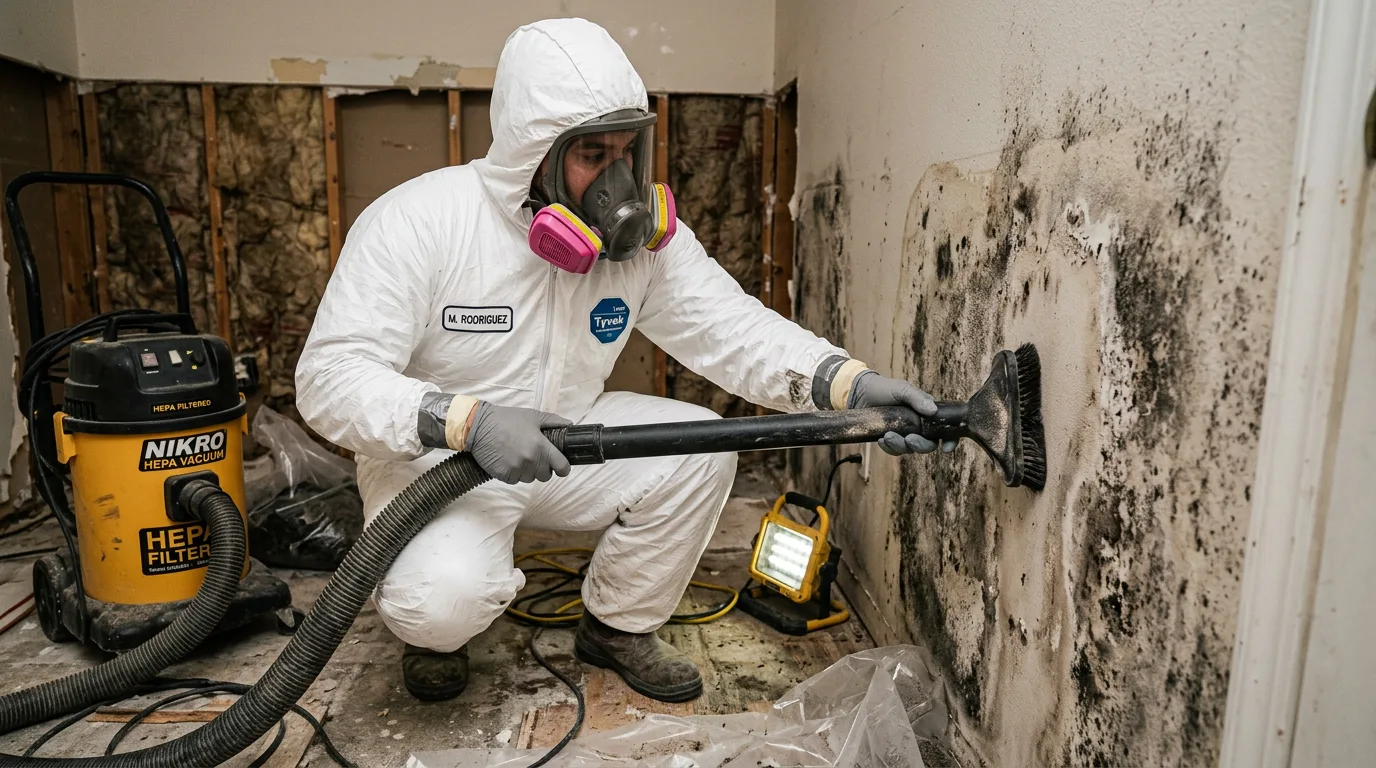
There’s a window of approximately 24–48 hours after any water damage event where professional drying can prevent mold from establishing. After that window closes, mold remediation shifts from prevention to treatment — a more expensive, more disruptive process that could have been avoided. In Lehi, this timing risk is amplified by a climate that creates a false sense of security: Utah’s semi-arid, low-humidity conditions dry surface materials rapidly, giving homeowners the impression that water damage is resolving while hidden moisture in wall cavities and under flooring supports active mold growth they can’t see.
In this post, we cover how mold establishes after water damage in Lehi, what health risks it creates, why Utah’s climate masks growth, and when professional remediation is the only appropriate response.
Mold After Water Damage in Lehi?
Don't disturb it — call for professional assessment first. (877) 698-1311 anytime.
How Mold Grows After Water Damage
Mold is a fungus that exists as spores in virtually every indoor and outdoor environment. Under normal conditions, spore concentrations are low and present no health risk. What causes mold problems after water damage is not the presence of spores — it’s the combination of moisture, organic material (drywall, wood, insulation), and temperature that activates spore germination and colony formation.
Within 24–48 hours of water exposure, mold spores on wet surfaces begin germinating. Within 72 hours, visible colonies can form under the right conditions. Within a week of unaddressed moisture, mold can spread across entire wall cavities, into insulation, and onto framing — requiring much more extensive remediation than would have been needed if drying had begun on day one.
The key materials in Lehi homes that support mold growth after water damage are: drywall paper facing (the organic layer that mold digests), wood framing, wood sub-flooring, paper-faced insulation, carpet and carpet pad, and any cellulose-based material. Concrete, tile, and metal are non-porous and do not support mold growth — which is why our remediation protocols focus on porous materials and treat non-porous surfaces with antimicrobial cleaning rather than removal.
Why Lehi’s Climate Makes Mold Risk Harder to Detect
Utah County averages only 16 inches of annual precipitation, and indoor humidity in Lehi homes is typically well below the national average — especially during winter and summer. This low humidity creates visible surface drying that is faster than most other regions. After a flooded basement is extracted, the concrete floor may appear dry within a day or two.
What low outdoor humidity does not address is the micro-environment inside a water-damaged wall cavity or under saturated sub-flooring. These spaces are insulated from the outdoor air and retain moisture at levels that support mold growth long after surfaces appear dry. A thermal imager and moisture meter confirm what the eye cannot see: wood framing inside a wet wall typically reads 30–40% moisture content after surface drying, while mold requires only 20% to maintain active growth. Homeowners who experience a spring flooding event in their Jordan Willows basement, see the concrete floor dry within a week, and assume the problem is resolved are frequently discovering mold 3–4 weeks later when a musty odor becomes impossible to ignore.
Post-Water-Damage Mold Assessment in Lehi
Don't assume surface drying means complete drying. Call (877) 698-1311 for a professional moisture check.
Health Risks of Mold in Lehi Homes
Mold produces mycotoxins and releases spores that affect air quality and human health in proportion to the exposure level and individual sensitivity.
Respiratory effects: The most common health manifestation of mold exposure is respiratory symptoms — coughing, wheezing, sinus congestion, and throat irritation that appear or worsen inside the affected structure and improve when occupants leave.
Allergic reactions: Mold is a potent allergen for many individuals. People with mold allergies experience symptoms similar to seasonal allergies — runny nose, itchy eyes, sneezing — that persist year-round if the mold source is inside the home.
Asthma exacerbation: Mold exposure is a well-documented asthma trigger. Children with asthma in mold-contaminated homes show increased symptom frequency and severity.
Toxic mold effects: Some mold species — particularly Stachybotrys chartarum (black mold) — produce mycotoxins associated with more severe health effects. While the prevalence of toxic mold is sometimes overstated, water-damaged structures can support its growth when conditions are favorable (sustained high moisture on paper-faced drywall).
Types of Mold Common After Water Damage in Lehi
Cladosporium: Very common, often first to appear after water damage. Appears as black or dark green spots. Associated with respiratory symptoms and allergic reactions.
Aspergillus: Multiple species with widely varying toxicity. Common in water-damaged insulation and drywall. Can cause serious illness in immunocompromised individuals.
Stachybotrys: “Black mold” — requires sustained high moisture on cellulosic materials. Less common than the above but associated with the most serious health concerns. More likely in repeatedly flooded areas or in areas where moisture damage was ignored for weeks.
Penicillium: Blue-green mold common on water-damaged wood and drywall. Produces musty odors and respiratory irritants.
When Professional Mold Remediation Is Required
DIY mold cleanup with bleach and consumer-grade products is appropriate only for very small, non-porous surface areas — less than 10 square feet of mold on a hard, cleanable surface like a tile wall. Any mold growing on or inside drywall, framing, insulation, or sub-flooring requires professional remediation with HEPA containment to prevent cross-contamination, proper disposal of contaminated materials, and post-remediation air clearance testing.
Our mold remediation service page covers the complete professional remediation process, including HEPA containment, air scrubbing, post-remediation testing, and what to expect in terms of timeline and cost for Lehi properties.
How Mold Affects Your Traverse Mountain or Willow Creek Home Differently
The clay-soil moisture dynamics in Lehi mean that mold after water damage is not a one-time event in many properties — it’s a recurring seasonal risk if the moisture source isn’t corrected. Homes in Traverse Mountain with grading issues that repeatedly introduce moisture against the foundation, or homes in Willow Creek with chronic basement seepage, may experience recurring mold problems that are remediated one year and return the next because the moisture source was never addressed. See our clay soil guide for the moisture dynamics that drive this pattern.
Frequently Asked Questions
Can I clean mold myself in my Lehi home?
For very small areas (under 10 square feet) of surface mold on non-porous materials, DIY cleaning with an EPA-registered mold cleaner is acceptable. Any mold inside walls, under flooring, in insulation, or on drywall requires professional remediation — attempting DIY removal distributes spores through the structure and may make the problem worse.
How long does mold take to establish after water damage in Lehi?
Mold spores begin germinating within 24–48 hours of water exposure when temperature and organic material conditions are favorable. Visible colonies typically appear within 72 hours on paper-faced drywall, wood, and insulation. This is why professional extraction and drying within the first 24 hours is so critical — it closes the window before germination begins.
Does mold remediation in Lehi require professional certification?
Professional mold remediation should be performed by IICRC-certified Applied Microbial Remediation Technicians. Utah does not require a specific state mold remediation license, but IICRC certification confirms that the company follows documented industry standards for containment, removal, and post-remediation verification. See our water damage complete guide for what to look for in a Lehi restoration contractor.
Related Resources:
- Water damage restoration Lehi: the complete guide for 2026
- Why Lehi’s clay soil makes water damage worse
- Traverse Mountain water damage: what every homeowner should know
Mold After Water Damage — Get Professional Help in Lehi
Don't guess whether surface drying was complete. Call (877) 698-1311 for professional moisture verification and mold assessment.