New Home vs. Historic Home: Water Damage Risks Across Lehi Neighborhoods
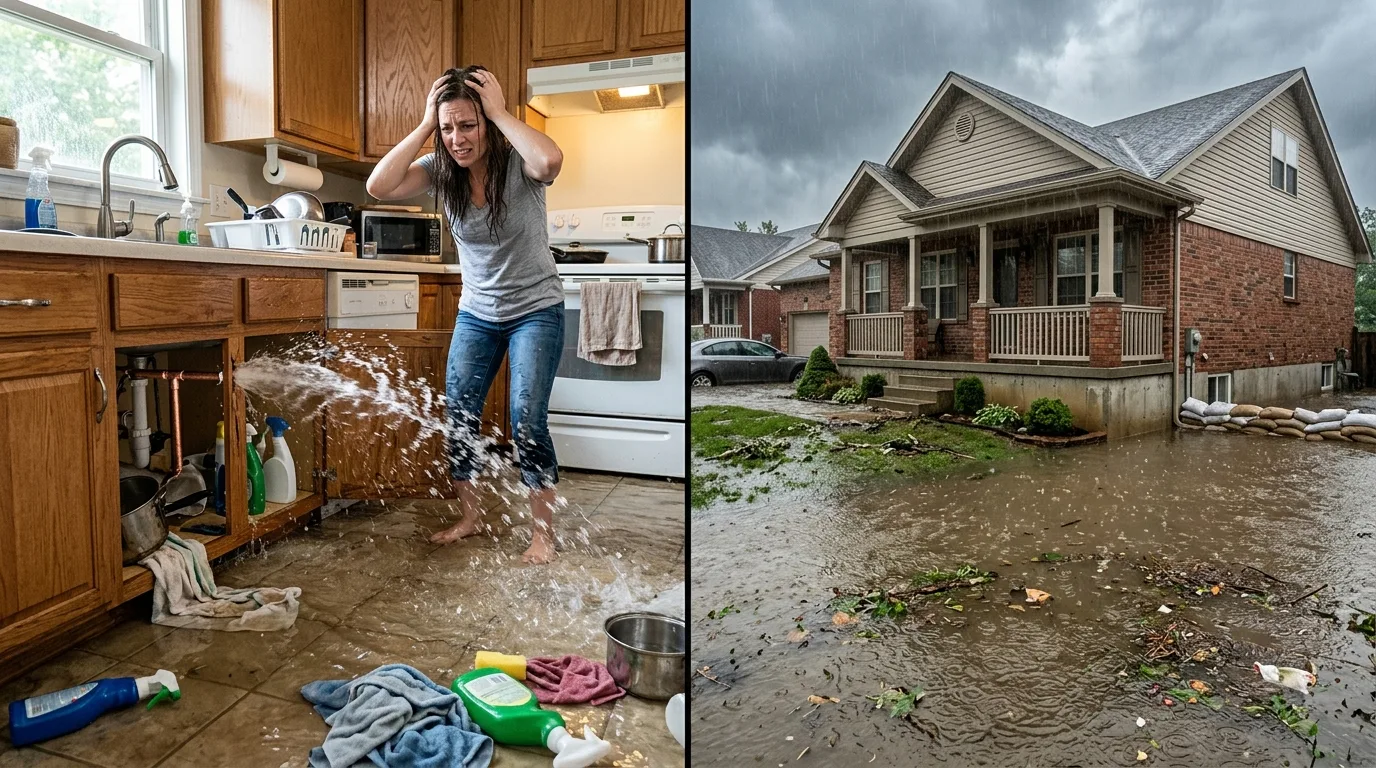
A water damage event in a 2018 Traverse Mountain home and a water damage event in a 1940s adobe home in Historic Downtown Lehi are completely different restoration challenges — even when the water source is identical. The materials absorb differently. The construction responds differently. The risk profile is different. And the restoration approach must account for these differences or the outcome will be inadequate. In this guide, we break down what makes Lehi’s new construction and historic housing stock respond differently to water damage, and what homeowners in each category need to understand.
In this post, we cover material differences, neighborhood-specific risk factors, restoration considerations for each construction type, and how to work with a contractor who understands these distinctions.
Water Damage in Any Lehi Home — Old or New
We restore both historic and modern construction to pre-loss condition. Call (877) 698-1311.
Why Construction Era Matters for Water Damage
Most water damage restoration guidance assumes a generic residential structure — drywall, OSB sub-flooring, fiberglass insulation, vinyl or carpet flooring. This assumption works for most homes built after 1990. It fails for homes built before 1950, and it fails with important nuances for homes built after 2005 in rapidly developed suburban communities like Traverse Mountain, where construction speed sometimes outpaced quality control.
The key variable is how the primary building materials respond to sustained moisture exposure. Modern materials are engineered for moisture resistance to varying degrees; historic materials were often chosen for availability rather than water resistance. Understanding your home’s construction era is the first step to understanding how a water damage event will unfold.
Historic Downtown Lehi: Pre-1950s Construction
Historic Downtown Lehi contains some of Utah Valley’s oldest housing stock — single-family homes built from adobe brick, hand-formed clay blocks that were common construction material throughout Utah in the late 1800s and early 1900s. Adobe is an extraordinary insulator and a challenging restoration material.
Adobe and moisture: Adobe brick is highly porous and absorbs water readily. Unlike modern concrete block, which is manufactured for compressive strength and relative moisture resistance, adobe loses significant structural integrity when wet. Extended moisture exposure can cause adobe to soften, swell, and in severe cases, dissolve. A water event that a modern construction home handles with 3–5 days of drying becomes a weeks-long restoration project in an adobe home.
Original plaster: Many Historic Downtown Lehi homes retain original lime or gypsum plaster that behaves very differently from modern drywall. Plaster absorbs moisture more slowly than drywall but releases it more slowly too — requiring extended drying times and creating false surface readings on moisture meters calibrated for modern materials.
Older plumbing: Pre-1950s homes in Lehi typically have galvanized steel or cast iron plumbing that has been replaced in portions over decades but may retain original sections. These pipes corrode internally and are subject to failure at joints that have been stressed by Lehi’s clay soil movement. The burst pipe repair and water extraction response for a galvanized pipe failure often reveals secondary damage from slow seepage that predates the acute failure event.
Water Damage in a Historic Lehi Home?
Adobe, plaster, and historic materials require specialized restoration approaches. Call (877) 698-1311.
Traverse Mountain: Post-2005 New Construction
Traverse Mountain represents a different set of challenges. This master-planned community on Lehi’s east bench was built rapidly in the mid-2000s real estate boom, and the speed of construction created conditions that affect water damage risk today.
OSB sub-flooring and moisture: Modern construction uses oriented strand board (OSB) sub-flooring almost universally. OSB is engineered wood that performs well under normal conditions but is highly susceptible to delamination and swelling when exposed to sustained moisture. An OSB sub-floor that sits in water for more than 48 hours typically cannot be dried and salvaged — it must be removed. Traverse Mountain homes that experience basement flooding or significant appliance leaks frequently require sub-flooring replacement.
Grading and drainage issues: The hillside bench terrain of Traverse Mountain required significant earthwork during construction. Disturbed soil settles over years, and grading that was correct in 2008 may have reversed by 2018, directing surface water toward foundations rather than away. This is one of the most common causes of basement moisture in Traverse Mountain — not pipe failure or external flooding, but grading that has gradually worsened over the home’s first decade. See our clay soil and water damage guide for the soil dynamics involved.
Faster water migration: Modern frame construction with drywall and blown insulation allows water to travel rapidly through the structure. A burst pipe in a Traverse Mountain home can affect multiple rooms within an hour because water runs down interior walls, through floor penetrations, and under flooring across large open floor plans. The speed of damage spread makes early water extraction particularly critical for these homes.
Restoration Differences by Construction Type
Drying timelines: Modern construction at 3–5 days; historic adobe at 7–21+ days depending on saturation level and construction details. Restoration contractors who use standard drying timelines for historic homes will fail to confirm complete drying and may leave hidden moisture that causes mold and structural degradation.
Moisture meter calibration: Different materials require different moisture meter settings. Gypsum drywall, hardwood, concrete, and adobe all have different baseline moisture contents and different target drying levels. A contractor using a single default setting for all materials will produce inaccurate readings in both historic and modern Lehi construction.
Insurance documentation: Insurance adjusters often use replacement cost value based on generic construction assumptions. Historic home restoration may require documentation of specialized materials and restoration techniques that deviate from standard replacement. Our estimates include material-specific documentation that supports accurate insurance valuation for both construction types.
How to Work With a Contractor on Either Construction Type
Whether your Lehi home is a 1930s adobe original or a 2015 Traverse Mountain build, the key questions to ask any restoration contractor are: (1) Do you adjust drying protocols for the specific materials in this structure? (2) How do you calibrate moisture meters for different material types? (3) Can you provide daily moisture logs documenting drying progress? (4) Do you coordinate permits through Lehi City’s Building and Inspection Department for reconstruction work?
Homeowners across the Thanksgiving Village neighborhood — which mixes construction eras — and in River Point’s newer EDGEhomes construction should also ask about the contractor’s experience with their specific construction type. A contractor whose experience is entirely in modern construction should not be your first call for a historic adobe restoration.
Frequently Asked Questions
Can I dry water-damaged adobe walls the same way as drywall?
No — adobe requires significantly different drying protocols including lower air mover velocities (high-speed air movers can damage soft adobe surfaces), extended drying timelines, and moisture meter calibration specific to the material. Attempting to dry adobe with protocols designed for modern construction often produces inaccurate moisture readings and leaves hidden moisture that causes structural degradation weeks after apparent drying.
Are newer Lehi homes less prone to water damage than older ones?
Newer homes have more moisture-resistant materials in some ways (engineered lumber, modern drywall, synthetic vapor barriers) but face different vulnerabilities: OSB sub-flooring that swells when wet, rapid damage spread in open floor plans, and grading issues from construction disturbance. Neither construction era is uniformly more or less vulnerable — the risks are different. Read our traverse Mountain water damage guide for neighborhood-specific context.
How does restoration cost differ between historic and new construction in Lehi?
Historic home restoration often costs more per square foot because specialized materials, extended drying time, and labor-intensive techniques are required. New construction restoration may have higher material costs if OSB sub-flooring and modern drywall must be replaced across large floor plan areas. The scope of the initial event — not the construction type — is still the primary cost driver. See our 2026 Lehi pricing guide for cost breakdowns.
Related Resources:
- Water damage restoration Lehi: the complete guide for 2026
- Traverse Mountain water damage: what every homeowner should know
- Thanksgiving Point area: water damage risks for Lehi landmark neighbors
Expert Restoration for Any Lehi Home
Historic adobe or modern construction — we adapt our protocols to your home's specific materials. Call (877) 698-1311.