Sump Pump Failure in Utah County: Why Your Lehi Basement Needs One
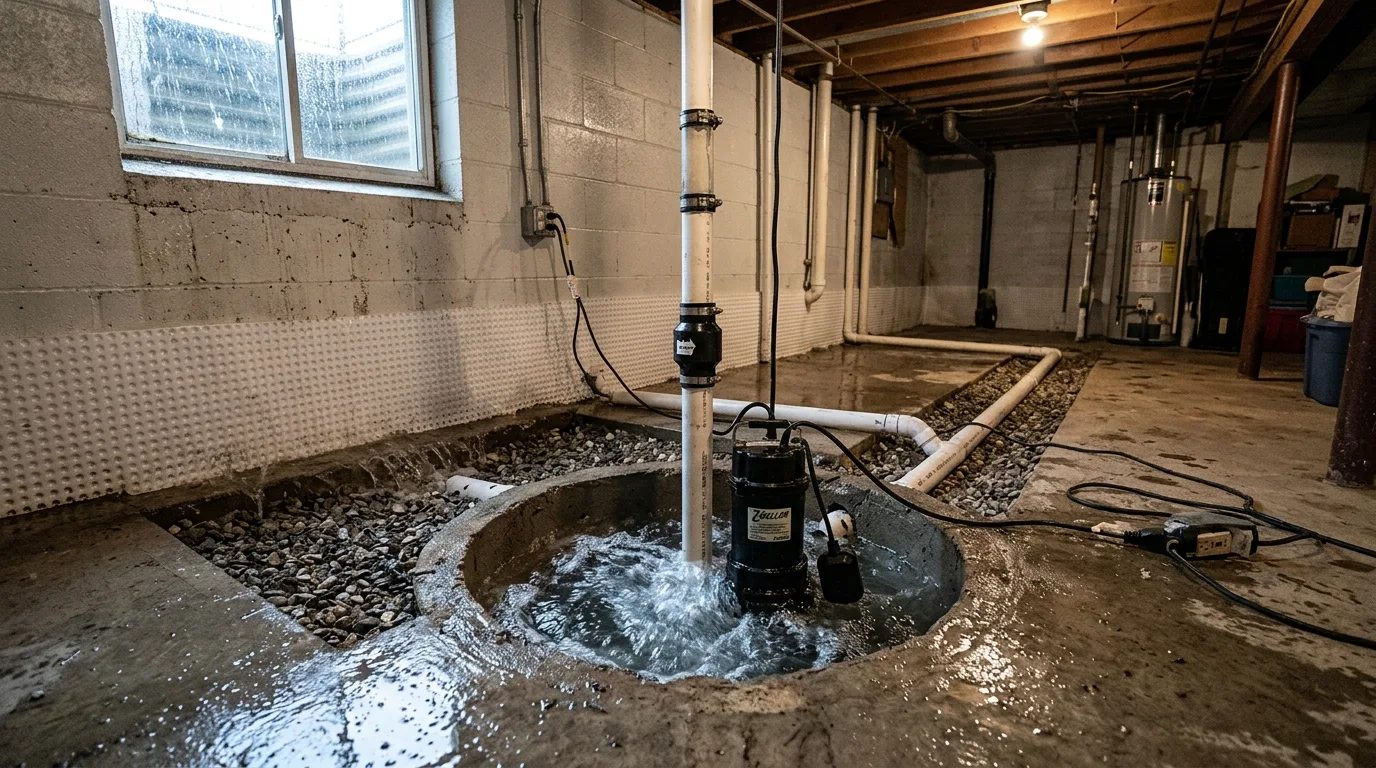
If you own a basement in Lehi, Utah, and you don’t have a functioning sump pump, you are one spring storm away from discovering why you needed one. Sump pump failure is the most preventable cause of basement flooding in Utah County — and sump pump absence is even more preventable. In this guide, we cover why Lehi’s specific conditions make sump pumps non-negotiable, how to select the right system, how to maintain what you have, and what to do when a pump fails during a flooding event.
In this post, we cover how sump pumps work, why Lehi’s clay soil and spring flooding season make them essential, what systems are most appropriate for Utah County, maintenance requirements, what sump pump failure looks like, and what to do when your basement floods due to pump failure.
Sump Pump Failed and Basement Is Flooding?
24/7 emergency water extraction throughout Utah County. Call (877) 698-1311 immediately.
How Sump Pumps Work and Why Lehi Needs Them
A sump pump is installed in a pit at the lowest point of a basement — the sump pit. When groundwater seeps through basement walls or accumulates in the drainage system surrounding the foundation, it collects in the pit. A float switch activates the pump when the water reaches a certain level, and the pump discharges water through a pipe to the exterior of the home — typically to a drain away from the foundation.
In dry-climate cities and well-drained sandy-soil environments, sump pumps are optional. In Lehi, they are functional necessities. The reasons are specific to Utah County conditions:
Clay soil hydrostatic pressure: During wet periods — peak spring snowmelt, winter thaw events, and prolonged precipitation — Lehi’s clay-rich soil becomes saturated and exerts hydrostatic pressure against basement walls. Water migrates through microscopic pores in concrete block and poured foundations under this pressure. Even a basement with no visible cracks can experience water intrusion during clay-soil saturation events. A properly sized sump pump manages this hydrostatic water before it can accumulate on the floor.
High water table near water features: Properties in Jordan Willows near the Jordan River corridor and in Saratoga Springs near Utah Lake face seasonally elevated water tables that create constant sumping demand in wet periods. Without a pump, these basements would have standing water routinely during spring.
Spring peak flooding volumes: Lehi’s spring flooding season delivers Wasatch snowmelt and heavy rainfall simultaneously, creating the highest-volume groundwater infiltration events of the year. During peak events, a properly sized sump pump may run nearly continuously. An undersized or failing pump falls behind quickly, and basement flooding results within hours.
Why Sump Pump Failure Is So Dangerous During Lehi Storms
The cruel irony of sump pump failure is that it happens at exactly the worst moment: during the storm event that makes the pump necessary. Power outages accompany spring storms in Utah County — and a power outage disables an electric-only sump pump precisely when hydrostatic pressure is at its highest. This is the scenario responsible for the largest number of basement flooding calls we receive in Lehi each spring.
A pump that fails during a peak event floods a basement faster than any other scenario because the hydrostatic pressure that has been building against the foundation walls suddenly has no check. Water that the pump was keeping at bay at 2 inches below the floor in the pit can rise to the floor level and continue rising within 30–60 minutes of pump failure.
Sump Pump Assessment for Your Lehi Basement
Let us evaluate your current system before spring arrives. Call (877) 698-1311.
Which Sump Pump System Is Best for Lehi
Primary submersible pump: A submersible pump rated for 1/2 to 1 horsepower handles most Lehi basement conditions. Size matters — an undersized pump that can’t keep pace with spring inflow is as risky as no pump at all. The pump should be able to empty the pit in under 5 minutes for standard conditions.
Battery backup sump pump: A battery backup is not optional for Lehi basements — it is a required component. When power fails during a storm, the battery backup activates automatically. Modern backup systems can run for 8–12 hours on a full charge, bridging the gap until power is restored. The backup unit is a separate pump that sits above the primary pump in the pit; it activates when the primary fails or when the pit level rises above the primary’s activation level.
Water-powered backup pump: An alternative to battery backup, the water-powered backup uses municipal water pressure to create a venturi effect that ejects water from the pit. These systems work regardless of power or battery state but require adequate water pressure to function and consume municipal water in the process. They are an appropriate secondary backup layer for high-risk Lehi properties.
Interior drainage system: For basements with significant hydrostatic pressure, the sump pump alone is not sufficient — it needs to be paired with an interior perimeter drainage system that collects water from the foundation walls and directs it to the pit. Without the drainage system, water enters the living space before reaching the pit. See our basement waterproofing service page for full drainage system details.
Sump Pump Maintenance for Utah County Basements
Annual maintenance before spring is the most important maintenance step for Lehi homeowners:
- Test the pump: Pour water into the pit until the float activates. Confirm the pump runs, empties the pit in a reasonable time, and shuts off cleanly.
- Test the backup: Disconnect the primary pump’s power and pour water into the pit. Confirm the backup activates.
- Check the discharge line: Follow the discharge pipe to its exterior outlet and confirm it’s not blocked, frozen (in winter), or discharging near the foundation.
- Clean the pit: Remove debris that has accumulated in the pit — debris can clog the pump inlet.
- Check the float: Ensure the float moves freely and isn’t stuck in the down position.
- Replace the battery: Replace backup batteries every 3 years regardless of perceived condition. Battery capacity degrades silently.
What Sump Pump Failure Looks Like
Signs of an impending or current pump failure:
- Pump runs continuously without reducing water level in the pit
- Pump makes unusual grinding or rattling sounds
- Pump activates but water doesn’t discharge from the exterior outlet
- Standing water in the basement despite the pump being present
- Pump never activates even when pit water is visible (float failure)
If you see any of these signs, address them before the next precipitation event — not after. In Lehi’s spring season, there may be days or weeks between storm events to schedule pump service.
What to Do When Your Sump Pump Fails During a Flood
- Call for water extraction immediately. Once water is on the basement floor, professional extraction is needed — consumer wet/dry vacs are not sufficient. See our emergency water extraction service page.
- Get a replacement pump installed ASAP. We can coordinate with plumbing and electrical contractors to get a replacement pump in place during the same response visit in many cases.
- Document everything. Photograph the failed pump, the flooded basement, and all damage before any cleanup begins.
- Check your insurance. Most homeowners policies cover water damage from sudden pump failure. A water backup and sump overflow endorsement covers this scenario more directly than standard dwelling coverage. See our insurance guide for Lehi homeowners.
Frequently Asked Questions
How often should I replace my sump pump in Lehi?
Sump pump motors typically last 7–10 years with normal use. In Lehi, where pumps may run continuously during spring events, a pump that is approaching 8 years old should be replaced preventively — not reactively. Battery backups should be tested annually and the battery replaced every 3 years.
Is a sump pump required by Lehi City building code?
Sump pump installation may be required for new construction below the frost line in certain soil conditions. For existing homes, there is no code requirement — but the practical requirement is clear for homes in Lehi’s clay soil with basement construction. Lehi’s Building and Inspection Department (385-201-1035) can clarify requirements for specific permit scenarios.
What causes spring flooding even with a sump pump installed?
The most common causes: pump is undersized for the spring inflow volume, battery backup is depleted or absent, discharge line is blocked or freezing at the outlet, the pit lacks an interior drainage system to collect perimeter water, or the pump has failed silently without the homeowner’s knowledge. Annual testing before spring addresses most of these scenarios.
Related Resources:
- Water damage restoration Lehi: the complete guide for 2026
- Spring runoff in Lehi: how snowmelt floods basements
- Emergency water damage checklist for Lehi homeowners
Sump Pump Failure Flooding in Lehi — We're Ready
Emergency water extraction and sump pump coordination throughout Utah County. Call (877) 698-1311 now.