Emergency Water Damage Checklist for Lehi Homeowners
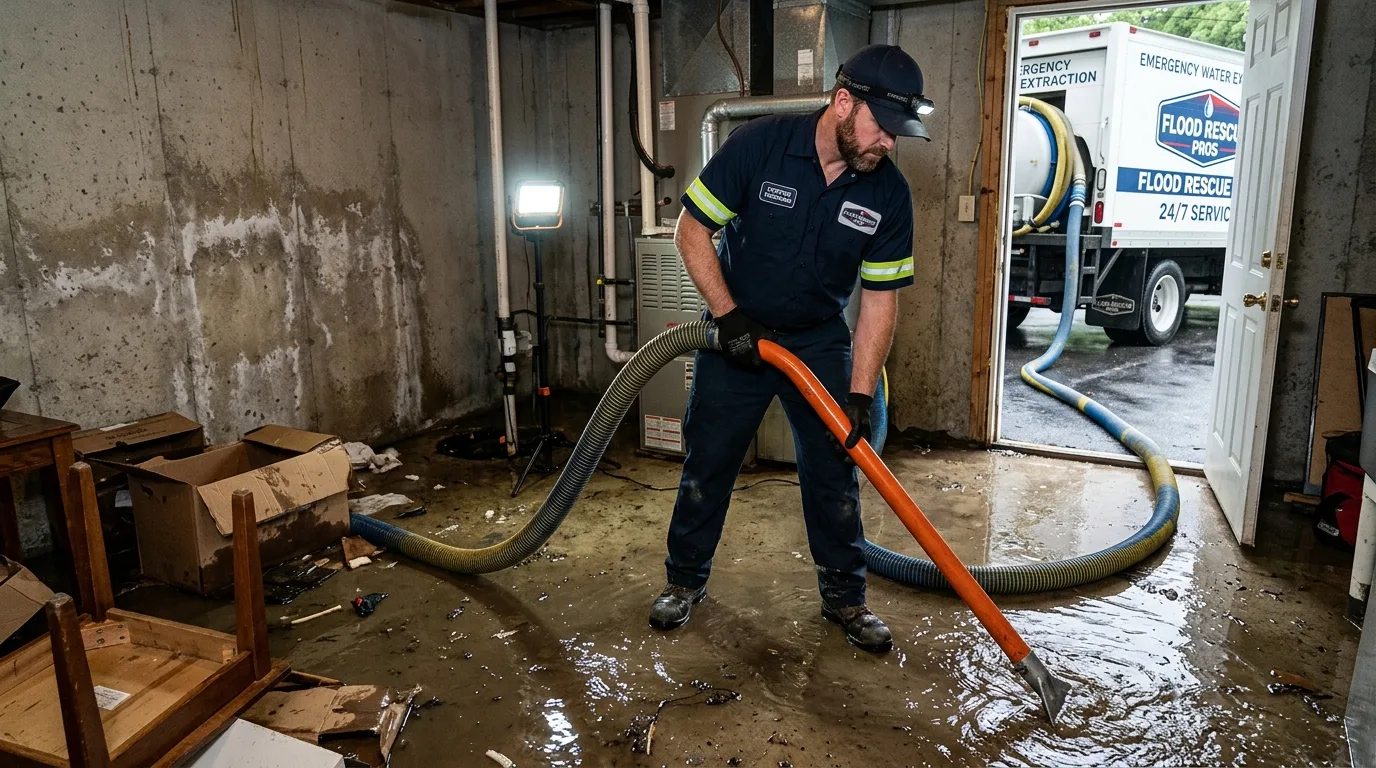
The first 60 minutes after discovering water damage in your Lehi home determine more about the final restoration cost than any single decision you’ll make afterward. Act correctly in that window and you contain the damage, protect your belongings, and position your insurance claim correctly. Act incorrectly — or wait — and the scope of damage compounds rapidly. This checklist is designed to walk you through the correct steps in the correct order for any water damage scenario in Utah County.
In this post, we cover immediate safety steps, water source actions, documentation, belongings protection, what NOT to do, when to call professionals, and what to prepare for the restoration team’s arrival.
Water Damage Emergency in Lehi?
Call us immediately — we respond 24/7 throughout Utah County. (877) 698-1311.
Phase 1: Immediate Safety (First 5 Minutes)
1. Do not enter flooded areas until you confirm electrical safety. Water and live electrical circuits are lethal. If flooding has reached electrical outlets, panel boxes, water heaters, HVAC equipment, or appliances, shut off electricity at the main breaker panel before entering the flooded space. If the panel itself is in the flooded area, contact your utility company for emergency shutoff.
2. Assess structural safety. Water that has saturated ceilings, walls, or floors can compromise structural integrity. If a ceiling is bulging with water, stay out of the room — a water-loaded ceiling can collapse without warning.
3. If the water source is a burst pipe or appliance, shut it off immediately. Locate and close the shutoff valve for the affected appliance or pipe. If you can’t isolate the source, shut off the main water supply to the home.
4. If flooding involves sewage, leave the area. Sewage contains bacteria, viruses, and parasites. Do not attempt to clean sewage without full protective equipment. Evacuate the affected area and call a professional immediately. Homeowners in older Lehi neighborhoods near Historic Downtown are particularly at risk during spring sewer surcharge events.
Phase 2: Water Source and Containment (Minutes 5–15)
5. Shut off the water source if you haven’t already. Every minute an active pipe runs adds approximately 4 gallons to the damage scope. Locate your main shutoff before you need it — if you don’t know where it is, find out today.
6. Open faucets. After the main is shut off, open all faucets in the house to drain remaining pressure and residual water from pipes above the break.
7. Use towels, mops, or absorbent materials to slow spread — not to extract. Your goal is to prevent water from reaching adjacent rooms while you wait for professional extraction. Do not use a household wet/dry vac to “dry” a flooded area; it will extract less than 1% of the moisture present in structural materials even after visible water is removed.
8. Remove area rugs and portable belongings from wet floors if safe to do so. Dyes from rugs and furniture can permanently stain floors when wet.
Professional Water Extraction in Lehi — Available Now
Call (877) 698-1311. We deploy immediately and work around the clock throughout Utah County.
Phase 3: Documentation (Minutes 15–30)
9. Photograph and video everything before any cleanup. Walk through the affected areas and document: the water source, the extent of flooding, all affected rooms and surfaces, damage to flooring, walls, and ceiling, and any personal property losses. This documentation is your insurance claim. Do not skip this step even if it feels like it’s slowing you down.
10. Note the time of discovery and approximate start time of the event (when you last saw the area dry, or when the appliance/pipe failure is believed to have occurred). Insurance claims often turn on the “sudden and accidental” language in your policy — documentation that the event was sudden protects your claim.
11. Contact your insurance company. Most policies require “prompt” notification of a loss. Call your insurer while the restoration team is on the way, not after. Note the claim number and the adjuster’s contact information.
Phase 4: Calling for Professional Help
12. Call a water damage restoration professional immediately. Not a plumber — a restoration company. Plumbers fix the source; restoration companies address the water damage that has already occurred. Call both if the pipe is still active, but prioritize getting restoration started.
13. Be honest and complete about the source of water. Tell the restoration team whether the water is from a supply line (clean water), appliance (possibly gray water), or toilet/sewer/flood (potentially Category 3). This determines the protective equipment and protocols the team must use and affects your safety.
14. Ask for thermal imaging as part of the assessment. Professional restoration teams use thermal cameras to map hidden moisture in walls, floors, and ceilings. Insist on this — it’s not optional. In Lehi’s clay-adjacent basements, water migrates further from the visible wet zone than in other regions due to capillary action through porous concrete.
Phase 5: Preparing for the Restoration Team
15. Clear pathways to the affected areas. Move furniture, storage boxes, and obstructions from the flood zone to give the team clear access for extraction equipment.
16. Identify and protect critical documents — move passports, financial documents, insurance policies, and irreplaceable papers to a dry location.
17. Identify any valuables in the flooded area — electronics, jewelry, heirlooms — and move them if safe and if they haven’t been contaminated by Category 3 water (in which case the restoration team must direct you).
18. Note any areas where water appears to have spread that might not be obvious. Water travels under flooring, through wall penetrations, and along pipe runs in ways that aren’t visually obvious. Communicate anything unusual — unusual sounds, running water sounds in walls, wet floors in rooms adjacent to the main event — to the restoration team.
What NOT to Do
Do not use a regular fan to dry a water-damaged space. Fans circulate mold spores without removing moisture. They can make mold problems significantly worse by distributing spores to unaffected areas.
Do not remove or discard damaged materials before the insurance adjuster visits. Save every piece of damaged drywall, flooring, and insulation for adjuster documentation. In Utah County, adjusters typically respond within 24–48 hours of a filed claim.
Do not use a carpet cleaning machine or steam cleaner on flooded carpet. These machines have far less extraction capacity than professional equipment and can push water deeper into the pad and sub-floor.
Do not wait to see if it dries itself. The 24–48 hour mold establishment window does not pause while you wait. See our mold after water damage guide for what happens when drying is delayed.
Seasonal Considerations for Lehi Homeowners
Spring (March–May): Peak season for sump pump failures, spring runoff flooding, and sewer surcharges. If flooding occurs during a spring storm event, be aware that municipal services may be overwhelmed — have your restoration company’s number already stored in your phone.
Winter (December–February): Peak season for burst pipes from freezing. If you wake to frozen pipes, shut off the main before thawing — a frozen pipe may have already cracked. See our burst pipe guide for the complete winter pipe response protocol.
Summer/Fall: Lower risk periods in Lehi, but isolated thunderstorms can cause flash flooding through canyon runoff channels. Hailstorms can damage roofing and cause immediate ceiling leaks. These scenarios follow the same checklist above.
Frequently Asked Questions
How quickly does water damage spread in a Lehi home?
Water moves through drywall at a rate of approximately 1 foot per hour under moderate conditions. It moves faster through gaps in flooring, along pipes, and through penetrations in walls. In Lehi’s clay-adjacent basements, capillary action can draw moisture upward through concrete block walls several feet above the standing water level. This is why the first 2 hours are so critical for limiting damage scope.
Should I call my insurance company or the restoration company first?
Call the restoration company first — stopping damage growth is more time-sensitive than administrative claim filing. You can call your insurer from your phone while the restoration team is in transit. Most policy notification requirements allow same-day or next-day reporting, not within-minutes reporting.
What if I can’t afford water damage restoration in Lehi?
If cost is a concern, call us and be upfront about it. We can advise on the minimum scope needed to prevent mold establishment and secondary damage, discuss insurance coverage, and provide financing information. Attempting to DIY restoration to save money frequently results in higher total costs when mold remediation is needed weeks later. See our 2026 pricing guide for cost context.
Related Resources:
- Water damage restoration Lehi: the complete guide for 2026
- Burst pipes in Lehi: winter prevention and emergency response
- Spring runoff in Lehi: how snowmelt floods basements
- Sump pump failure in Utah County: why your Lehi basement needs one
Emergency Water Damage Response in Lehi — 24/7
Call (877) 698-1311 the moment you discover water damage. We serve all of Utah County around the clock.