Appliance Leaks in Lehi, UT: Prevention Tips for Utah Valley Homes
What’s the most common cause of water damage insurance claims in Utah County? Not spring flooding. Not burst pipes. It’s appliance failures — washing machine hose ruptures, dishwasher supply line failures, and refrigerator ice maker line leaks that happen silently while families are at work or asleep, releasing gallons per hour onto floors and into sub-flooring before anyone notices. In this guide, we cover how to prevent appliance-related water damage in Lehi homes, what signs indicate an appliance is at risk, and what to do when an appliance leak occurs.
In this post, we cover the appliances most likely to cause water damage in Lehi, why Utah Valley conditions add to the risk, prevention steps by appliance, warning signs to watch for, and how to respond when an appliance leak is discovered.
Appliance Leak Damage in Lehi?
Professional water extraction and drying throughout Utah County. Call (877) 698-1311.
Why Appliance Leaks Are a Major Water Damage Source in Lehi
Lehi’s rapid residential growth means a large percentage of the city’s housing stock was built in the same decade — the mid-2000s to 2010s — with appliances that are now approaching or exceeding their typical service life. Washing machine supply hoses have a recommended replacement interval of 5 years; many Lehi homes have original hoses from 2007 or 2008 that have never been replaced. Refrigerator ice maker lines — small, plastic, easy to forget — become brittle with age and UV exposure.
Utah Valley’s water hardness adds another failure mechanism. Lehi receives hard water from mountain snowmelt that passes through mineral-rich geology. This hard water deposits calcium and magnesium scale inside appliance supply lines, water heaters, and dishwasher components, accelerating internal degradation. Scale buildup reduces flow rates, increases internal pressure, and creates the mineral-weakened zones where failures initiate.
Washing Machine: The Highest Risk Appliance
Washing machine supply hoses are responsible for more catastrophic in-home water damage events than any other appliance. A burst supply hose — the rubber or braided lines connecting the machine to the hot and cold supply valves — releases water at mains pressure continuously until discovered. At standard residential water pressure, a burst supply hose releases 4–10 gallons per minute.
Prevention steps:
- Replace rubber supply hoses every 5 years — regardless of visible condition. Rubber degrades from the inside.
- Upgrade to stainless steel braided supply hoses — they are far more burst-resistant than rubber hoses and cost $15–$25 per pair.
- Install a washing machine water shutoff valve — an automatic shutoff that detects water on the floor and closes the supply valve immediately.
- Do not leave home while the washing machine is running. Most catastrophic hose failures occur during wash cycles.
- Pull the machine out annually to inspect hoses for bulging, cracking, or corrosion at connections.
Dishwasher: Silent Leaks Under Cabinets
Dishwasher supply line failures and door seal deterioration cause water damage that often goes undetected for weeks — because dishwasher leaks accumulate under the cabinet, in the sub-flooring, and inside the cabinet base rather than in the open floor. By the time a homeowner notices a soft floor or musty smell, the sub-flooring may have been wet for months.
Prevention steps:
- Inspect under the sink cabinet and under the dishwasher annually for moisture or water stains.
- Replace the dishwasher supply line every 7 years. Supply lines run from the shutoff valve under the sink to the dishwasher inlet.
- Check the door gasket (the rubber seal around the dishwasher door) annually. A cracked or deformed gasket allows water to spray onto the floor during cycles.
- Run a water leak sensor under your dishwasher — a $15–$20 device that alerts you when water is present.
Water Damage From an Appliance Leak in Lehi?
Professional assessment and drying for Utah County homes. Call (877) 698-1311.
Refrigerator Ice Maker: The Forgotten Risk
Refrigerator ice maker supply lines are small — typically 1/4-inch plastic or copper tubing — but run at full mains pressure. These lines run from a shutoff valve behind the refrigerator (or under the sink) through a hole in the wall or floor to the refrigerator. They are difficult to inspect visually because they run behind the refrigerator or through finished wall cavities.
Prevention steps:
- Replace plastic supply lines with copper or braided stainless steel. Plastic tubing becomes brittle with age and UV exposure.
- Leave adequate clearance behind the refrigerator — 2–3 inches minimum — to prevent the supply line from being kinked when the refrigerator is pushed back.
- Inspect the connection at the refrigerator inlet valve annually. This is the most common failure point — a ferrule that works loose over time.
- If you don’t use your ice maker, shut off the supply valve. A line that’s under pressure but not used is still at risk.
Water Heater: Age and Pressure Relief
Water heaters are typically designed for 8–12 years of service. Lehi’s hard water accelerates sediment buildup inside the tank that corrodes the tank floor from the inside. Failures can be gradual (slow seepage around fittings) or catastrophic (tank rupture releasing 40–80 gallons).
Prevention steps:
- Flush the water heater annually to remove sediment buildup — a 15-minute task that extends tank life significantly.
- Replace water heaters at 10 years — don’t wait for a failure. The cost of proactive replacement is far lower than emergency replacement plus water damage restoration.
- Install a drain pan under the water heater connected to a floor drain, if one is present. This contains a slow leak before it causes floor damage.
- Test the temperature and pressure relief valve annually — a stuck T&P valve can allow over-pressurization that leads to a catastrophic failure.
How Appliance Leaks Differ From Burst Pipes in Lehi
A burst pipe in Lehi is typically a sudden, high-volume event from a frozen pipe — discovered quickly because the flow is obvious. An appliance leak is often a slow, hidden failure that accumulates damage over days or weeks before discovery. The slow leak scenario is actually more expensive in many cases because extended moisture exposure causes deep saturation of sub-flooring, mold establishment, and structural degradation that a sudden burst pipe — discovered within hours — does not produce.
The drying process for a slow appliance leak that has been present for weeks requires extended timelines and more aggressive material removal than a fresh burst pipe event. In Lehi, where summer’s low humidity encourages homeowners to believe slow leaks are drying on their own, the hidden moisture from appliance failures is a major source of late-stage mold remediation jobs. For cost context on appliance leaks vs. other water damage types, see our 2026 Lehi pricing guide.
Process: What Happens After an Appliance Leak Is Discovered
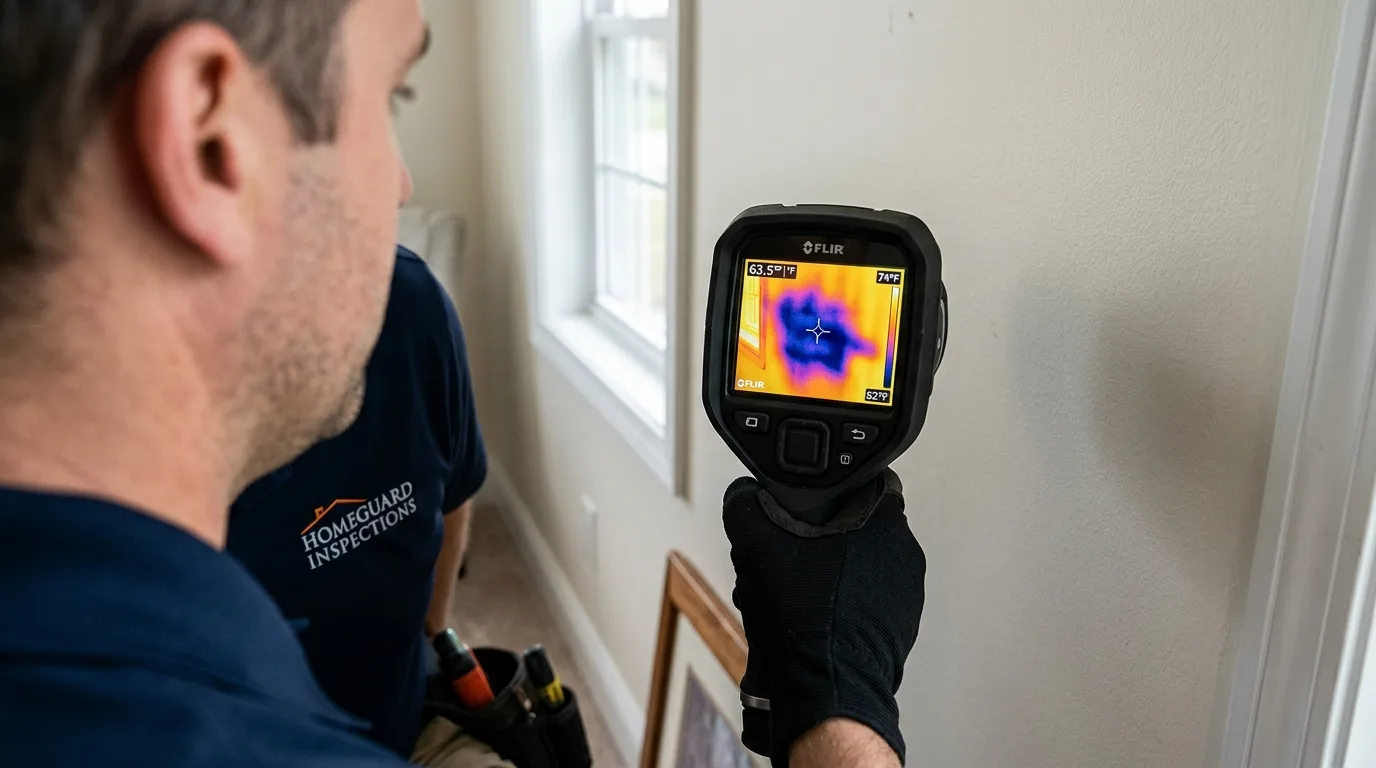
When we respond to an appliance leak in Lehi, the first step is always the same: shut off the water source (the appliance shutoff valve) and perform a thermal imaging scan to map the full extent of moisture migration. Appliance leaks frequently spread under flooring and into adjacent rooms that show no surface signs — thermal imaging identifies the true scope before we set equipment placement.
Extraction and drying follow the standard water damage restoration process, with timeline adjusted for whether the leak was recent or had been occurring for an extended period. If sub-flooring is saturated, drying in place may be possible if the event is recent; weeks-long slow leaks almost always require sub-flooring removal. See our emergency water extraction service page for the complete scope.
Frequently Asked Questions
How do I know if my washing machine supply hose is about to fail?
Visual warning signs: bulging at the hose body, cracking or crazing of the rubber surface, white mineral deposits at connections indicating past seepage, and corrosion on the supply valve fittings. However, many supply hoses fail without prior visible warning — which is why the 5-year replacement interval is based on age, not appearance.
Does homeowners insurance cover appliance leak damage in Lehi?
Standard HO-3 policies typically cover sudden and accidental appliance failures — including burst supply hoses and dishwasher failures. Coverage for slow leaks that were known but not addressed is typically denied. Document the leak as sudden when reporting to your insurer. See our insurance guide for Lehi water damage for coverage details.
Are appliance failures more common in Lehi than other Utah cities?
Lehi’s hard water accelerates appliance component degradation at a higher rate than soft-water regions. Combined with a large proportion of homes in the 10–15 year age range — when first-generation appliances reach end of life — Lehi does see a higher rate of appliance-related water damage claims than newer cities. Preventive replacement of hoses and supply lines is particularly cost-effective for Utah Valley homeowners for this reason.
Related Resources:
- Water damage restoration Lehi: the complete guide for 2026
- Burst pipes in Lehi: winter prevention and emergency response
- Does homeowners insurance cover water damage in Lehi?
Appliance Leak Water Damage in Lehi — Fast Response
We respond immediately to appliance failures throughout Utah County. Call (877) 698-1311.